

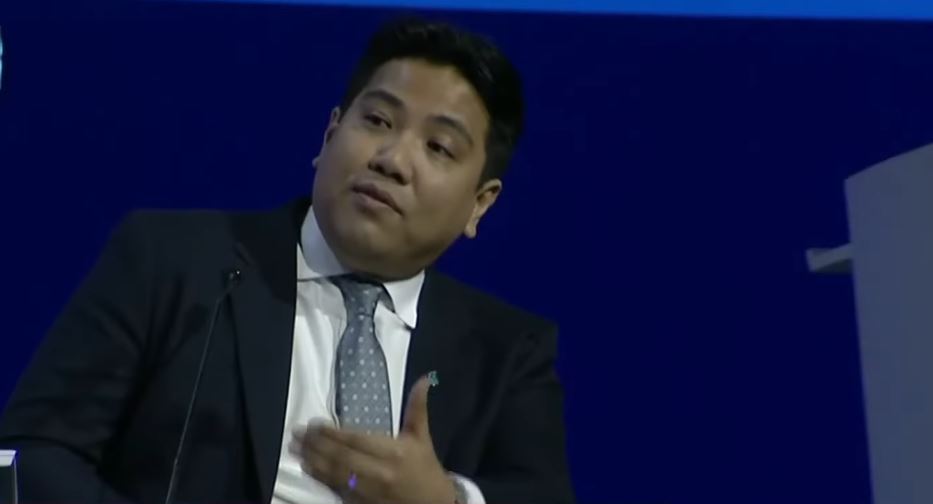
Few names arouse as much authority and interest in Malaysia’s corporate hierarchy as Tan Sri Tengku Muhammad Taufik Tengku Kamadjaja Aziz. His leadership is known for its responsibility, strategy, and quiet power as the CEO of PETRONAS. However, Malaysians are always curious about the income of the nation’s most influential business leader.
Analysts and insiders have frequently calculated that the Gaji CEO Petronas receives more than RM1 million a month, despite PETRONAS’s decision to keep executive compensation private. The benefits that are typical of elite energy companies, such as executive allowances and performance incentives, are included in this projection. Given PETRONAS’s global prominence, this number is not surprising. The CEO is in charge of a company that powers a country, brings in billions of dollars, and represents Malaysia in boardrooms from Houston to Doha.
| Category | Details |
|---|---|
| Company | Petroliam Nasional Berhad (PETRONAS) |
| CEO | Tan Sri Tengku Muhammad Taufik Tengku Kamadjaja Aziz |
| Title | President and Group Chief Executive Officer |
| Estimated Monthly Salary | RM1 million to RM1.2 million (industry estimates) |
| Estimated Annual Package | RM12 million – RM15 million including bonuses |
| Sector | Energy, Oil & Gas |
| Headquarters | Kuala Lumpur, Malaysia |
To put this into perspective, the top 1% of Malaysian wage earners earn about RM25,000 per month, which is impressive by local standards but essentially insignificant when compared to the salary of a top executive like Tengku Taufik. Senior executives at PETRONAS, for example, frequently make between RM80,000 and RM130,000 a year, placing the CEO’s compensation in a stratosphere only a select few corporate leaders can afford.
However, this discrepancy reveals a story of scale rather than indulgence. Running PETRONAS is a lot like running a small country. The business supports thousands of jobs, makes a substantial GDP contribution to Malaysia, and serves as the cornerstone of the country’s energy security plan. Its CEO serves as a national steward and a business leader in many respects. A compensation package that is in line with international standards is justified by the weight of such responsibility.
Because of the industry’s complexity and volatility, energy executives around the world receive exceptionally high compensation. With bonuses and stock awards included, CEOs at major oil companies like BP, ExxonMobil, and Saudi Aramco usually make between USD 10 million and USD 20 million a year. Tengku Taufik’s estimated package, when translated, is still quite small in comparison to his international counterparts, especially considering PETRONAS’s similar operational scale and global reach.
Tengku Taufik is a prime example of the emergence of domestic talent in Malaysian corporate settings. With a background in economics and finance, he started out at PETRONAS and worked his way up the ranks, first as a financial strategist, then as chief financial officer, and finally as CEO in 2020. His path exemplifies a leadership style based on institutional loyalty and long-term vision. He is a highly trusted figure in government circles and among international investors because of that journey, which is uncommon in many multinational corporations.
His calm and analytical leadership style has been especially helpful in times of uncertainty. Instead of implementing mass layoffs as many corporations did during the pandemic, he strategically reduced top-level salaries. Morale was maintained and thousands of jobs were saved thanks to this action, which was viewed as both responsible and compassionate. The gesture received a lot of praise from Malaysia’s business community for striking a strikingly good balance between human empathy and corporate prudence.
Tengku Taufik is frequently praised by industry observers for being incredibly clear in expressing PETRONAS’s direction. He has promoted a forward-thinking energy transition, pledging to maintain the company’s profitability while investing in renewable energy sources and becoming carbon neutral. PETRONAS’s performance has significantly improved since 2020 thanks to his approach, which is based on data-driven decision-making and adaptive strategy. This has ensured PETRONAS’s resilience in the face of fluctuating oil prices and changing global energy demand.
His salary, however, continues to captivate people because it represents more than just wealth; it also signifies Malaysia’s position in the international business world. PETRONAS is more than just a massive energy company; it is a symbol of the strength of the country. Every ringgit linked to the CEO’s salary stimulates a public debate about justice, merit, and accountability. In this way, the Gaji CEO Petronas controversy is more about perception—how Malaysians balance equality and ambition—than it is about statistics.
This curiosity is only stoked by corporate comparisons. For example, with a monthly salary of about RM12 million, Tan Sri Lim Kok Thay of Genting Group continues to be the highest-paid CEO in Malaysia. CEOs in the banking and healthcare industries, such as Dr. Kelvin Loh of IHH Healthcare or Tan Sri Tay Ah Lek of Public Bank, make between RM1.2 and RM1.6 million a month. Given PETRONAS’s size and state ownership, Tengku Taufik’s estimated salary seems to be consistent within that hierarchy.
But he is also constantly watched because he is the head of a company with ties to the government. The leadership of PETRONAS is answerable to the country, as opposed to private sector CEOs who only answer to shareholders. That expectation entails pressure as well as privilege. Public opinion can be influenced by any corporate decision, from executive compensation to exploration investments. However, Tengku Taufik has skillfully and discreetly handled this delicate balance, preserving the company’s reputation while advancing its modernization.
During his leadership, PETRONAS has made significant investments in digital innovation, renewable energy, and international alliances, broadening its scope beyond conventional oil and gas. The company has positioned itself as an energy leader in Southeast Asia’s changing economic landscape by diversifying its portfolio through strategic partnerships. This flexibility has been very effective in maintaining PETRONAS’ competitiveness in the face of global energy shifts.
Despite its size, Tengku Taufik’s compensation can be seen as the price of expertise, acknowledging his capacity to handle intricate geopolitics, volatile markets, and rapid technological advancement. It reflects a larger global trend in which CEOs are being paid more for resilience than just revenue. Leaders who can provide both sustainability and innovation are highly valued as markets demand both.
National psychology is also touched upon in the public discussion surrounding Gaji CEO Petronas. The wealth of PETRONAS’ executives is both laudable and contentious because Malaysians frequently view the company as an extension of their national pride. However, in contemporary business environments, long-term vision is now used to gauge success rather than just profit margins. Through crises and reforms, Tengku Taufik’s leadership of PETRONAS has established the business as not just profitable but also forward-thinking.
PETRONAS wants to diversify its revenue sources and increase its presence in hydrogen and renewable energy in the upcoming years, which could completely change Malaysia’s economic landscape. With such aspirations, the CEO’s compensation becomes a part of a bigger narrative—a representation of the nation’s shift toward leadership driven by innovation.
