

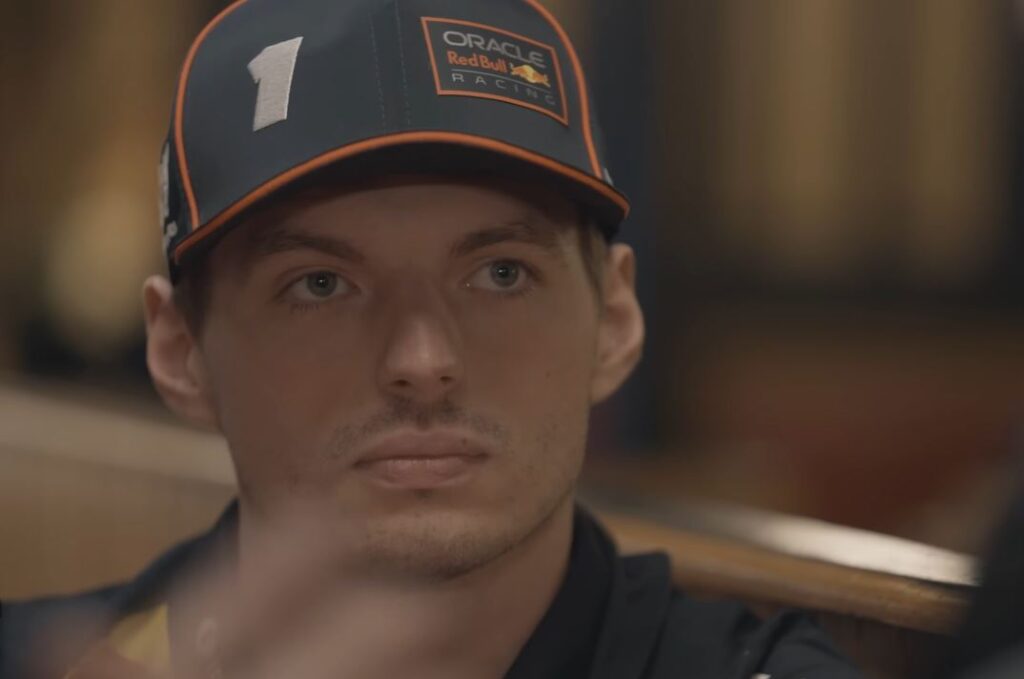
Max Verstappen’s $65 million yearly salary is a remarkable example of how much an athlete can achieve with skill, timing, and accuracy. He has surpassed the illustrious Lewis Hamilton as the highest-paid driver in Formula 1 thanks to his five-year, $275 million contract with Red Bull Racing. Since bonuses and endorsements are not included in this amount, Verstappen’s actual income is probably much higher. This amount is especially remarkable considering that he is only 28 years old.
In any case, Verstappen’s compensation is a clear example of Red Bull’s commitment to long-term security of its most valuable asset. Red Bull has been turned from a formidable rival into an unstoppable force by his leadership and constancy. His calm yet assertive demeanor has significantly enhanced the brand’s credibility in foreign markets, and his four straight championships from 2021 to 2024 were remarkably successful in reestablishing the team’s global dominance.
| Category | Information |
|---|---|
| Full Name | Max Emilian Verstappen |
| Birth Date | September 30, 1997 |
| Age | 28 |
| Nationality | Dutch-Belgian |
| Current Team | Red Bull Racing |
| Championships | 4 (2021–2024) |
| Estimated Annual Salary (2025) | $65 million |
| Estimated Net Worth | $210 million |
| Contract Duration | 2024–2028 |
| Partner | Kelly Piquet |
| Height | 5 ft 11 in |
Verstappen receives a base salary of $65 million annually, which does not include the additional performance bonuses that can greatly increase his income, according to RacingNews365. He has gained titles and a reputation as one of the smartest and most disciplined drivers of his generation thanks to his remarkable track record. Every Grand Prix seems more like an exhibition of his relentless skill than a competition.
Verstappen’s financial portfolio has expanded beyond racing through well-timed endorsements. Collaborations with Heineken, Viaplay, EA Sports, and Jumbo have been especially helpful in enhancing his reputation as a global brand ambassador and a national hero. His partnership with Red Bull has also been mutually beneficial; he is more than just the team’s spokesperson; he is an integral part of its identity. As Formula 1’s sponsorship income keeps increasing, Verstappen’s marketability has improved to the point where he can effectively convert visibility into value.
Verstappen’s career has grown at an exponential rate over the years. As a rookie in 2015, he was only making about $300,000. His salary doubled by 2020 after reaching $10 million by 2018. The breakthrough period followed, with $42 million in 2021, $55 million in 2024, and now $65 million in 2025. This development shows how results and dependability are the real currencies in top sport, serving as a financial timeline of consistent excellence and commercial appeal.
It’s interesting to note how Verstappen’s pay has increased in tandem with Formula 1‘s rise to prominence in pop culture and digital entertainment. Through social media engagement, esports, and streaming, the sport has attracted a new audience in the last ten years. Verstappen has established himself as a key player in this expansion by utilizing his worldwide visibility, making him a contemporary athlete whose reputation extends beyond the racetrack. His online following is comparable to that of elite basketball and football players, demonstrating the remarkably adaptable nature of contemporary sports celebrity.
Red Bull’s strong faith in his long-term vision is further evidenced by his contract extension through 2028. Verstappen is one of the most loyal athletes. Similar to the infrequent alliances we’ve seen between legendary athletes and their teams—Tom Brady with the Patriots, Lionel Messi with Barcelona, or Roger Federer with Rolex—he remains dedicated to the same team that initially gambled on him as a teenager. He enjoys the stability and creative freedom to create his own legacy, and Red Bull is able to plan future campaigns around him thanks to this continuity.
Beyond pay and incentives, Verstappen’s future endeavors show a man getting ready for life beyond Formula 1. With the goal of developing fresh talent and building a long-lasting motorsport brand, he has already started his GT3 racing team. Verstappen is establishing a standard for athletes who want to be in charge of their post-career stories by incorporating this project into his business portfolio. In a field where few drivers maintain their influence after leaving the grid, this forward-thinking strategy is especially novel.
Two dynasties are subtly bridged by his relationship with Kelly Piquet, the daughter of three-time champion Nelson Piquet. By fusing history with modern glitz, they collectively represent a contemporary take on racing royalty. Without going overboard, their polished yet understated public appearances increase his market appeal. Verstappen, like Rafael Nadal or David Beckham, strikes a balance between class and competition, which sponsors find to be incredibly resilient.
Verstappen’s pay, taken as a whole, is indicative of the shifting economics of professional sports. Due to the growth of fan engagement platforms, sponsorship diversification, and international streaming agreements, Formula 1’s financial ecosystem has grown remarkably quickly. Such a contract would have been unthinkable ten years ago. It now signifies not only prosperity but also the acceptance of Formula One as a worldwide entertainment industry.
In contrast, Verstappen’s $65 million salary surpasses both Lando Norris’s $20 million and Ferrari’s Charles Leclerc’s $34 million yearly salary. Even Hamilton, who currently races for Ferrari, is said to make $80 million, but Verstappen’s age, skill, and prospects make his contract much more calculated. His pay seems less extravagant and more inevitable because of his consistency, as he has placed in the top three in almost every race in 2024.
Verstappen’s approach to wealth is especially noteworthy because it reflects his driving style, which is efficient, calm, and focused. He makes discreet investments in real estate and motorsport endeavors, in contrast to some athletes who partake in extravagant lifestyles. He has openly discussed how having money frees him up to focus on performance rather than pressure. “Money gives me freedom to race without fear, but it doesn’t change how I drive,” he said. His motivation has been remarkably sustained by that mindset.
His compensation also affects society. It encourages young athletes to see motorsport as a respectable career path that rewards intelligence, accuracy, and tenacity rather than just as a competition. Verstappen has established an inspiring precedent by striking such a balance between his career and finances, demonstrating that talent and discipline can coexist with enormous financial gain.
Verstappen is among the top ten highest-paid athletes in all sports, with an estimated total career salary of over $500 million as of 2025. Without endorsements, he makes more than $1 million every race weekend. His success is especially remarkable, though, because every dollar feels like it was earned via performance rather than character.
His ascent from teenage prodigy to iconic figure in Formula 1 shows how excellence, maintained with humility and accuracy, can lead to empire-building. Verstappen’s tale is one of ambition, foresight, and poise rather than just salary records. His career hums with balance, consistency, and unrelenting momentum, much like a finely tuned engine. And his salary of $65 million? It’s just a champion’s financial reflection, and their drive is literally unstoppable.
