

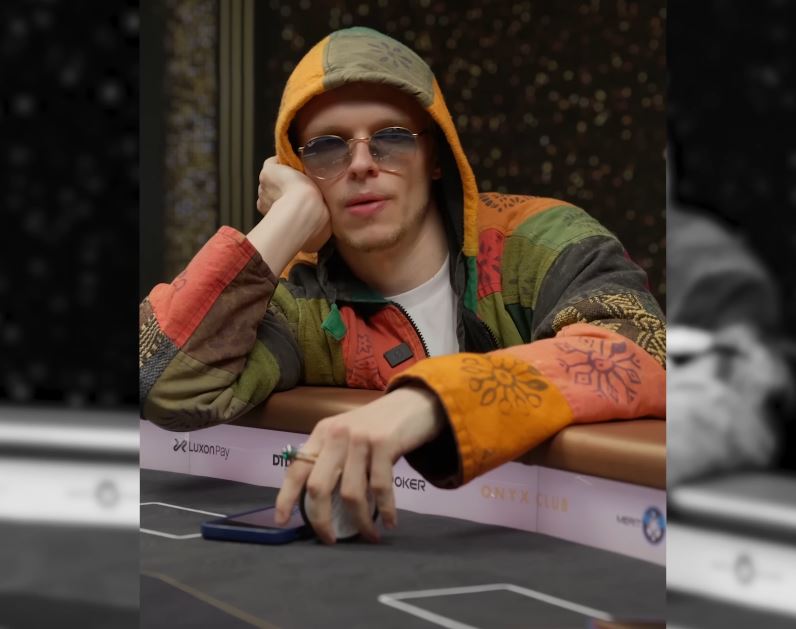
Ossi Ketola, more commonly known as “Monarch” in the poker and esports communities, is the quintessential modern risk-taker: restlessly ambitious, divisively self-assured, and extraordinarily successful. One of Finland’s most intriguing digital entrepreneurs, he is both admired and questioned for his unusual journey from teenage hustler to poker sensation. His estimated net worth is between $25 million and $50 million.
Ketola, who was only fourteen, wouldn’t accept typical adolescent activities. His first online endeavors were small rental businesses and later gambling startups related to the multiplayer game RuneScape, while his peers were trading soccer cards. He turned curiosity into money by using his innate charm and remarkably astute business sense, opening the door for what would eventually become a gaming empire.
| Category | Information |
|---|---|
| Full Name | Ossi Ketola |
| Nicknames | Monarch, Joopii, Dossiossi |
| Nationality | Finnish |
| Age | 28 (born 1997, Finland) |
| Profession | Entrepreneur, Poker Player, CEO of CSGOEmpire and Duel |
| Estimated Net Worth | $25 – $50 million (as of 2025) |
| Major Ventures | CSGOEmpire, Duel Casino |
| Poker Earnings | $4.75 million in live tournaments |
| Known For | High-stakes poker, esports gambling ventures |
In 2016, he made a significant breakthrough with CSGOEmpire, an online platform that lets users bet on virtual goods called “skins.” What started out as a specialized experiment swiftly developed into a dominant force in digital gaming. With millions of transactions every day, the website developed into a gathering place for esports fans. Ketola put himself at the forefront of a billion-dollar industry that traditional investors still don’t fully understand thanks to his remarkably effective scaling of his concept.
He has stated in interviews that he is “more driven by competition than money.” His business endeavors, however, reveal a man who is exceptionally skilled at making money off of people’s actions in virtual environments. He created platforms that made it difficult to distinguish between play and profit by fusing gaming, entertainment, and chance. Because of his especially creative strategy, he caught the attention of regulators and tech titans who were intrigued by his bold success.
Despite his genius as an entrepreneur, Ketola has been plagued by controversy. He acknowledged having a “scammer’s past” as a teenager in frank online confessions. His initial antics, such as providing fictitious doubling schemes in RuneScape, caused a change. He claims that he used the experience as inspiration to reveal fraud in the gambling industry and to use his platforms to advocate for openness and fair play. Many people found this transition from criminal to reformer to be surprisingly redemptive.
Due to his business success, Ketola was financially independent by the middle of his twenties. However, his real passion—poker—was going to change who he was in public. He attracted attention right away when he made his debut in 2024 in Monte Carlo in the Triton Super High Roller Series. Seldom had any poker player so boldly stepped into the top tier or dressed so flamboyantly, wearing diamond-studded watches and white fur coats. He immediately became one of poker’s new elite after earning almost $3 million for finishing second in a $150,000 tournament.
Ketola turned into a spectacle in live, high-stakes matches in the months that followed. Audiences around the world were enthralled by his notorious challenge to Dan “Jungleman” Cates at the Onyx Super High Roller Series in Cyprus. After fighting for millions, the two won an incredible $7.7 million pot, which at the time was the biggest televised hand. Despite losing a staggering $21 million at the end of that week, Ketola maintained a remarkably composed demeanor. He saw it as a calculated risk that combined branding, entertainment, and daring defiance.
He was compared by onlookers to early poker greats like Phil Ivey or Tom Dwan, who combined skill and unpredictable play. Ketola, on the other hand, sees poker as performance art—a means of enhancing his image and his businesses—while traditional pros pursued mastery of the game. He created Duel.com, a slick online casino that seamlessly combines streaming, esports, and gaming entertainment, by surrounding himself with top players.
Ketola is unique not only because of his wealth but also because of the boldness with which he amassed it. He once said, in a way that seems both poetic and practical, that “money is just fuel for imagination.” Through his endeavors, he combined digital entertainment with live spectacle, redefining the relationship between gambling and entrepreneurship. His status as “Monarch” isn’t just a reflection of his conceit; it also shows how he can maintain control over narratives and command attention even in the face of harsh criticism.
According to industry insiders, his platforms process billions of dollars’ worth of virtual currency every year. Even though a large portion of that number cannot be verified, it shows how widespread his influence was. In contrast, the estimated yearly revenue of CSGOEmpire is comparable to that of well-known casino operators, and Duel’s entry into the Asian market may propel his profits to previously unheard-of heights. This growth trajectory demonstrates how, when combined with unrelenting self-promotion, entrepreneurial creativity can still thrive in the crowded field of online gaming.
Ketola, like many disruptors, however, draws conflicting views. He is praised for being incredibly resilient, having weathered several scandals that could have destroyed others. Critics contend that rather than substance, he thrives on spectacle. Even they acknowledge, however, that his influence cannot be denied. Because of him, poker and esports entrepreneurship are now seen as aspirational rather than peripheral. Younger audiences, who see taking risks as a form of self-expression rather than recklessness, find his story especially compelling.
It’s interesting to note that Ketola’s impact goes beyond gaming and poker. He cultivates a cult-like following on social media by blending humor, candor, and self-deprecation under the alias “Monarch.” Because of his erratic public persona, which combines genius and chaos in equal measure, fans liken him to individuals such as Elon Musk. He acknowledges that “losing is the only way to learn where your limits end” in his pensive posts about failure. In a field where ego is frequently the driving force, such honesty, which is remarkably uncommon among high rollers, humanizes him.
His financial tenacity, however, continues to be the central theme of the narrative. His net worth keeps increasing in spite of massive fluctuations at the tables. Analysts give his varied portfolio—which includes media rights associated with his online properties, cryptocurrency holdings, and gaming endeavors—credit. Ketola made sure that even well-known losses have a strategic function by retaining strict ownership and a consistent brand identity, which helped him draw attention, grow his audience, and fortify his online business.
Ossi Ketola, a gambler who became CEO and a provocateur who became a visionary, is a singularly contemporary figure today. His transformation from teenage con artist to multimillionaire businessman is a case study in flexibility as much as it is about atonement. He used especially creative thinking to turn controversy into opportunity, chaos into capital, and risk into reputation.
