

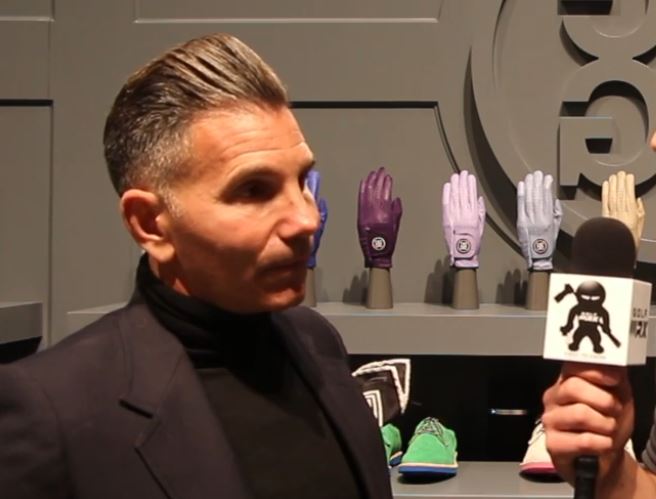
The story of Mossimo Giannulli effectively conveys the erratic nature of fame, wealth, and rebirth. His projected 2025 net worth of $80 million reflects both his legacy of taking calculated risks and his creative tenacity. Despite being one of the youngest self-made CEOs in retail history, he is most known for having founded Mossimo, a once-iconic fashion brand that revolutionized casual American style.
Giannulli was born into an Italian-American family in Los Angeles in 1963, and his early years were marked by modest aspirations. He attended the University of Southern California to study architecture and business, but left after three years. In 1986, he opened Mossimo from his tiny apartment on Balboa Island with a $100,000 loan from his father. His goal was surprisingly obvious from the beginning: to turn the carefree surf style of Southern California into wearable identity.
| Category | Details |
|---|---|
| Full Name | Mossimo Giannulli (born Massimo Giannulli) |
| Date of Birth | June 4, 1963 |
| Place of Birth | Los Angeles, California, United States |
| Nationality | American |
| Profession | Fashion Designer, Entrepreneur |
| Known For | Founder of Mossimo Clothing Brand |
| Estimated Net Worth (2025) | $78–$80 million |
| Major Source of Wealth | Mossimo Clothing, Target Licensing, Iconix Sale |
| Spouse | Lori Loughlin (separated 2025) |
| Children | Isabella Rose, Olivia Jade, and Gianni |
| Brand Milestone | Sold Mossimo to Iconix Brand Group in 2006 |
He created colorful shorts and graphic tees that became status symbols among teens and beachgoers by utilizing youth culture and West Coast trends. The brand’s explosive growth was especially noteworthy; Mossimo made $1 million in its first year and $4 million the next. Sales had skyrocketed to $32 million by 1992, demonstrating Giannulli’s remarkably astute timing and consumer psychology skills.
His ascent was swift. He went public with Mossimo Inc. on the New York Stock Exchange in 1996 when he was just 32 years old. Giannulli’s 73% stake was immediately valued at $275 million during the IPO, which turned into one of the year’s most active listings. His paper net worth momentarily surpassed $500 million when the company’s stock hit a peak of $50 per share, making him one of the most prosperous young businessmen of his time.
However, he would discover that success is rarely long-lasting. Mossimo failed to draw luxury buyers and alienated his devoted following by trying to shift his focus from inexpensive surfwear to expensive fashion. The change was especially detrimental; within two years, shares fell 90%, and by 1998, his fortune had significantly decreased to about $50 million. It was a quick fall, but it was also the start of his rebirth.
By entering into a licensing agreement with Target in 2000, Giannulli carried out a daring recovery strategy. In addition to giving him $8.5 million in yearly royalties, the $27.8 million deal made Mossimo a household name that regular Americans could now afford. The partnership was incredibly successful; Giannulli’s financial situation stabilized and Target acquired style credibility. His choice to forgo exclusivity in favor of accessibility turned out to be very novel at the time and served as an inspiration for subsequent designer-retail partnerships in the sector.
Giannulli sold Mossimo to Iconix Brand Group in 2006, six years later, for $135 million in cash and debt assumption. His direct involvement came to an end with the sale, and his long-term wealth was cemented. Even though his brand’s cultural influence waned over time, millions of people who grew up wearing his creations kept its legacy alive in their closets.
In addition to fashion, Giannulli’s life has been closely linked to Hollywood since he married actress Lori Loughlin in 1997. She was the wholesome Full House star, and he was the stylish businessman who built an empire from the ground up. The couple soon became a symbol of success and glamour. In addition to raising two daughters, Olivia Jade and Isabella Rose, they made significant real estate investments and bought multimillion-dollar homes in California, ranging from Bel Air to Hidden Hills.
However, the Operation Varsity Blues scandal in 2019 brought about a dramatic reckoning with their shared success. The pair allegedly paid $500,000 in bribes to get their daughters accepted as phony rowing recruits to the University of Southern California. Giannulli received a five-month prison sentence and a $250,000 fine for the incident, which garnered international attention. Loughlin received a two-month sentence. Both of them later resurfaced with cautious optimism, concentrating on family, charity, and restoring trust after their reputations suffered a serious blow.
Surprisingly, Giannulli’s finances held steady even after the scandal. His property holdings, royalties, and investments—rather than his active fashion endeavors—were primarily responsible for this resilience. In addition to equity in smaller design and lifestyle brands, his financial portfolio consists of opulent homes in La Quinta and Los Angeles. His ability to maintain long-term financial stability is extremely effective, even though he temporarily lost the public’s favor. This is due to the diversification and foresight he developed during the height of his career.
His journey has far-reaching effects that go well beyond his own narrative. Giannulli was instrumental in democratizing the accessibility of fashion. Affordable designer partnerships were practically unheard of prior to Mossimo’s agreement with Target. His collaboration paved the way for later advertising campaigns, such as Karl Lagerfeld for H&M and Isaac Mizrahi for Target, which connected high fashion with regular consumers. His concept was especially novel since it heralded a new era in retail where mass distribution and brand prestige could coexist.
Since then, his kids—Olivia Jade in particular—have achieved fame of their own. Olivia’s work as an influencer and digital creator demonstrates how the Giannulli-Loughlin family is still ingrained in modern society. She successfully rebranded herself through openness and entrepreneurship in spite of previous scandals; these traits are remarkably similar to her father’s business tenacity.
Another significant turning point in Mossimo’s financial and personal story occurred in 2025 when it was confirmed that he and Lori had divorced after almost thirty years of marriage. According to reports, years of stress following their public scandal and divergent career paths led to the decision. However, Giannulli’s entrepreneurial instinct seems to be remarkably unaffected by emotional and financial changes. His largely self-made fortune has surprisingly lasted, supporting his endeavors and way of life.
The development of American ambition itself is reflected in Mossimo Giannulli’s career trajectory, which combines ingenuity, risk, failure, and redemption. His capacity to rise above the ashes of public scandal and business failure is still a striking example of tenacity. Mossimo is more than just a brand to many; it represents flexibility and creativity.
His contributions are still highly significant in the fashion industry. He foresaw the streetwear revolution decades before it became popular by making surfwear a billion-dollar industry. He democratized design and fought elitism by embracing accessibility through retail partnerships. And by enduring personal adversity, he proved that, with perseverance at its core, success can be restored even after being put to the test.
