

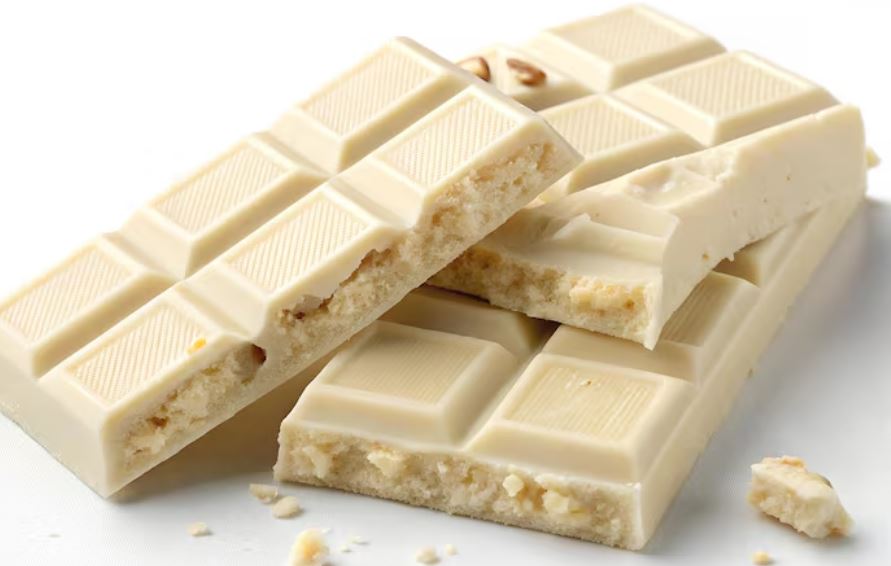
White chocolate has always elicited strong feelings; some people love it for its velvety creaminess, while others think it lacks the bitter depth of cocoa. But when viewed from a new angle, its origins, reimagining, and cultural significance show an extraordinarily adaptable treat that has profoundly influenced culinary trends.
Its beginnings are remarkably similar to those of many great culinary innovations: a combination of necessity and luck. Nestlé introduced the Galak bar in Switzerland in 1936. In Britain, it was rebranded as Milkybar and promoted as a kid-friendly treat. They produced something surprisingly unique by combining surplus milk powder from the post-World War I era with cocoa butter. It was caffeine-free, tasted softer, and looked softer — a treat that parents thought was especially good for kids.
Popular White Chocolate Brands and Their Unique Qualities
| Brand | Specialty / Unique Quality |
|---|---|
| Nestlé Milkybar | Classic creamy bar, originally marketed for children since 1936 |
| Lindt | Smooth, premium white chocolate with balanced sweetness |
| Cadbury | Popular UK brand, particularly sweet and accessible |
| Valrhona | Luxury French chocolatier, creator of the innovative “Dulcey” blond chocolate |
| Green & Black’s | Organic white chocolate with vanilla bean specks, strong natural flavor |
| Tony’s Chocolonely | Ethically sourced, chunky bars with rich creaminess |
| Milka | European brand known for extra-creamy texture and affordable pricing |
| Fruition | Artisan chocolatier offering toasted white chocolate with nutty depth |
| El Rey | Venezuelan brand using undeodorized cocoa butter, bold and distinctive |
| Callebaut | Professional-grade white chocolate, widely used by pastry chefs |
The Milkybar Kid, a blond child wearing cowboy attire and glasses, rose to prominence as a cultural mascot in Europe in the 1960s. However, adults tended to avoid the sweet, creamy product because they thought it lacked sophistication. This view started to change over time. By the end of the 20th century, chefs in Belgium and Spain were experimenting with white chocolate pralines, enhancing their reputation by serving them with nuts or orange peel. Its reputation in Europe had significantly improved by the 1980s thanks to its luxury positioning.
The story of Japan took on a new dimension. When Rokkatei first introduced white chocolate in 1968, it was not very popular. However, after the Discover Japan campaign in the 1970s, its fortunes changed. Young visitors to Hokkaido sampled its rich local treats and took the flavor home with them. Soon after, a custom known as “White Day” developed in which men gave women white chocolate as a reaction to Valentine’s Day presents. This custom is still important in society today. Japanese marketers made sure that white chocolate accomplished something incredibly successful: cultural permanence, by deftly associating the product with social ritual.
The story was equally fascinating in the United States. Nestlé’s almond-studded Alpine White bar, which was marketed mainly to women in 1984, was a lighter, more delicate treat. The dessert boom of the 1980s, when white chocolate macadamia cookies, mousse, and cheesecakes dominated menus and home kitchens, contributed to its ascent. Celebrities adopted boutique assortments as a component of aspirational food culture after Oprah Winfrey included them on her list of “Favorite Things.” However, consumer disapproval increased by the 1990s, when some tastings referred to it as “candle wax” and critics ridiculed its sweetness. Products were discontinued, and sales fell.
But trends tend to come up again and again. White chocolate was reimagined by molecular gastronomy chefs in the 2000s. It was combined with matcha by Parisian pastry chef Sadaharu Aoki, whose pairing was remarkably clear in striking a balance between bitterness and creamy sweetness. White chocolate was first used with savory ingredients at The French Laundry in California, and it was incorporated into dozens of regional flavors at Japanese Kit Kats. Chefs demonstrated how white chocolate could be both decadent and incredibly inventive through these inventive experiments.
Its resurgence was solidified by the craft chocolate movement. Due to its caramelized, nutty flavor, which was created by slow cooking regular white chocolate, Valrhona’s Dulcey, sometimes referred to as “blonde chocolate,” became a cult favorite. El Rey and Fruition came next with their own takes, presenting variations that seemed genuine and handmade. Similar to how natural wines test palates accustomed to polished flavors, El Rey’s use of undeodorized cocoa butter, which preserved more of the pod’s natural character, was strikingly bold but controversial.
Influencers and celebrity chefs were equally significant. While Martha Stewart praised white chocolate’s versatility in sophisticated home baking, Dominique Ansel, best known for the Cronut, embraced it in seasonal desserts. White chocolate became a digital star as Instagram and TikTok creators promoted caramelized spreads, iced matcha-white chocolate lattes, and stylized cakes with ivory shavings. It has gained new significance in socially conscious food culture due to its visual appeal, remarkable durability under camera lights, and ease of pairing with colorful fruit.
White chocolate has received both praise and criticism for its nutritional value. Although it doesn’t have as many antioxidants as dark chocolate, its caffeine-free profile has proven to be very effective for people who don’t want to take stimulants. Health-conscious customers observe that its creamy fat content, when used sparingly, provides satiety, and that its sweetness can be counterbalanced with berries or citrus. White chocolate is now associated with mindful indulgence rather than overindulgence in the context of wellness trends, where moderation has become the message.
It has a big cultural impact. White chocolate has evolved from a kid’s treat to a high-end ingredient, from being mocked as a fake to being significantly enhanced by creative chefs and progressive companies. Its tale reflects broader consumer trends, which have seen people reject excessively processed foods and embrace artisanal, sustainably produced, and ethically sourced goods. Craft producers have strengthened the relevance of white chocolate by working with cocoa cooperatives to place it within the broader sustainability discourse.
White chocolate is now seen as an alternative to milk or dark chocolate rather than as a competitor. Its mildness makes it very adaptable, letting strong flavors like passionfruit, ginger, or basil take center stage. It stabilizes mousses or buttercreams in fine dining, and it sweetens cheesecakes or cookies in home kitchens. Its versatility has greatly lessened the stigma that was previously associated with it. White chocolate has cemented its position in culinary culture, whether it is shaved onto risotto in avant-garde dining or consumed as a Lindt truffle.
From its unintentional creation to its repeated reimaginings, white chocolate serves as an example of how food frequently reflects shifting social mores. It was a lighthearted novelty at first. It later turned into a statement of luxury. Today, chefs, influencers, and health-conscious consumers all embrace it as a symbol of innovation. White chocolate, like the culture of indulgence it symbolizes, has proven to be incredibly dependable in adjusting to trends, withstanding criticism, and constantly reinventing itself.
