

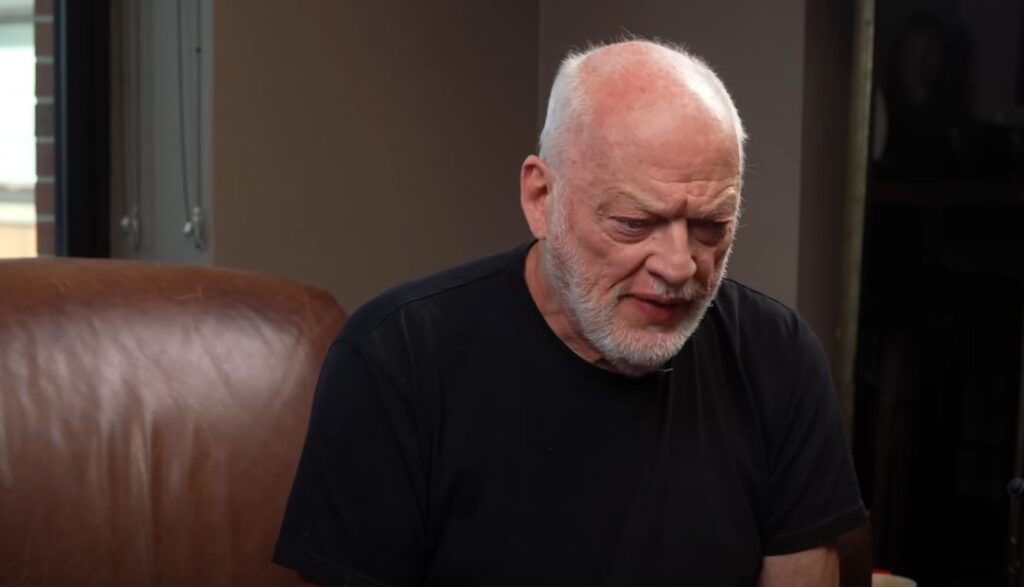
David Gilmour’s estimated $180 million net worth is a remarkable example of integrity and artistry. His wealth has been accumulated over decades of dedication to sound, emotion, and craftsmanship rather than passing fads. His journey from the sleepy suburbs of Cambridge to international fame with Pink Floyd demonstrates how remarkable success can be achieved through creative perseverance.
Gilmour’s decades-long membership in Pink Floyd, one of the most influential and commercially successful rock bands in history, is the cornerstone of his wealth. Over 250 million copies of albums like The Wall, Wish You Were Here, and The Dark Side of the Moon have been sold worldwide. According to estimates, Gilmour makes between $6 and $8 million a year from continuing sales, licensing, and streaming of these classic pieces.
| Category | Information |
|---|---|
| Full Name | David Jon Gilmour |
| Date of Birth | March 6, 1946 |
| Place of Birth | Cambridge, England |
| Age | 79 years |
| Nationality | British |
| Occupation | Musician, Singer, Songwriter, Producer |
| Associated Act | Pink Floyd |
| Active Years | 1963 – Present |
| Estimated Net Worth (2025) | $180 million |
| Music Genres | Progressive Rock, Psychedelic Rock, Art Rock, Blues Rock |
| Spouses | Virginia “Ginger” Hasenbein (m.1975–1990), Polly Samson (m.1994–present) |
| Children | Eight |
| Awards | CBE, Rock & Roll Hall of Fame (1996), Q Award for Outstanding Contribution (2008) |
In 2024, Pink Floyd’s music catalog was sold to Sony Music for about $400 million, marking a significant financial milestone. Gilmour still receives royalties from the songs he wrote because the agreement covered the band’s recorded music and branding rights but not the copyrights to individual songs. The action was especially creative because it put an end to years of internal conflict and guaranteed the financial preservation of his creative legacy.
Gilmour’s solo career has been just as remarkable as Pink Floyd’s. His solo tours brought in over $100 million, and his albums Rattle That Lock and On an Island both peaked at number one on the UK charts. Just the Rattle That Lock tour brought in about $78 million, proving that his music is still incredibly popular decades after Pink Floyd’s heyday.
Although many musicians use endorsement deals to boost their income, Gilmour has taken a noticeably more circumspect approach. Every few years, he earns an additional $5–7 million from the selective licensing of Pink Floyd’s songs for movies and documentaries. He earned more millions as a result of his partnership with Fender to release the “Black Strat” reissue, further solidifying his position as a brand and an artist.
Gilmour is especially intriguing because of the way he purposefully strikes a balance between wealth and purpose. He put 120 of his most prized guitars up for auction in 2019, including the legendary Black Strat, which brought in close to $4 million. He gave all of the $21.5 million raised by the event to ClientEarth, a nonprofit organization that fights climate change. The message of this act was very clear: contribution, not possession, is what truly adds value.
His real estate holdings reflect the same understated elegance that characterizes his music. He reportedly owns a $15 million seaside mansion in Hove, East Sussex, which has been restored to preserve the town’s historic charm. He also keeps up a rural estate in Oxfordshire, where he constructed a recording studio encircled by sculptures and peaceful gardens. Gilmour famously donated all £4.5 million from the sale of his London house to a housing charity in 2002.
Gilmour keeps his personal assets collection purposefully modest. He has a vintage Jaguar E-Type, a Tesla Model S, and a 35-foot sailing yacht that he uses for peaceful getaways on the English coast. The value of his remaining guitar collection, which is now smaller but still very valuable, is approximately $2 million. It displays his love of fine craftsmanship as well as his capacity to let go when kindness demands it.
Although his wealth could easily be greater, he constantly donates his profits to environmental and humanitarian causes. His contributions to initiatives for homelessness prevention, education, and prisoner rehabilitation highlight his awareness and empathy. His image as a stereotypical rock star has been considerably diminished by this deliberate redistribution of wealth, which has instead portrayed him as a thoughtful, goal-oriented person.
Gilmour is still a creator in his career. He will be reunited with his daughter Romany Gilmour for his next album, Voices in the Wind, which is anticipated to be released in late 2025 and includes collaborations with Johnny Marr. The project demonstrates how his artistic development is still ongoing, spanning generations with timeless yet modern sound.
Gilmour may have a slightly lower net worth than his longtime bandmate Roger Waters, but his reputation for honesty is far more solid. Gilmour’s strategy has been more introspective, emphasizing emotional connection over spectacle, in contrast to Waters’ emphasis on extensive tours. His public image has remained grounded while maintaining the prestige of his brand thanks to this artistic restraint.
The impact of Gilmour goes well beyond the music charts. His guitar style, which is characterized by slow bends, soulful phrasing, and emotional clarity, has influenced the methods of many musicians, including Ed O’Brien of Radiohead and John Mayer. In a time when speed and saturation are the norm, his emphasis on restraint and depth feels especially pertinent.
In his capacity as a philanthropist, Gilmour has been incredibly successful in raising fans’ awareness of social issues. In addition to being kind, his choice to donate his multimillion-dollar guitar collection changed the way that celebrity can be used to raise awareness of environmental issues. He transformed his legacy into something incredibly sustainable by fusing advocacy with art.
